.png)


Too Good to be Believed: The Hidden Cost of High Masking

One of my favorite education reformers is Dr. Ross Greene, child psychiatrist and creator of the Collaborative and Proactive Solutions (CPS) Model. He challenges the old assumption that children do well if they want to and replaces it with: children do well if they can.
Built on extensive research, Dr. Greene found that when kids misbehave, it’s because a need isn’t being met—not because they’re trying to be difficult. Helping kids meet their needs and solve problems without shame, judgment, or punishment improves behavior everywhere from home to school to detention facilities.
I've taught at schools that use the CPS Model. It's respectful, humane, and effective. It sets-up kids for future success.
From Classroom to Community
I bring up Dr. Greene because his insight doesn’t stop at childhood. Kids whose needs aren’t met grow into adults who may still struggle—and they’re often blamed for “choosing” not to meet expectations. Their parents get blamed too. Any attempt to solve the underlying problem is treated as an excuse.
Differently wired people—especially those who are high masking—often have their struggles dismissed or outright disbelieved. That’s ableism, and it’s dangerous. It can derail lives and rob communities of contributions from people who have something genuinely different and valuable to offer.
Too Good to Be Believed
High masking happens when neurodivergent or trauma-wired people camouflage their differences to meet societal expectations. It’s survival by disguise. Masking hides symptoms, but it doesn’t erase reality—and it can push a person’s system toward collapse.

Unless someone’s difficulties are “severe enough” to be obvious, outsiders may decide nothing’s wrong. When the mask slips, the labels come fast: careless, dramatic, disorganized, spacey. Or worse—troublemaker, unstable, avoidant, damaged.
Here’s what people don’t see:
Days of recovery after a single meeting
The mental gymnastics of suppressing stims or managing sensory overload
The exhaustion of holding it all in, smiling through it, performing “fine”
The physical and cognitive toll of long-term masking
The unspoken rule is brutal: We won’t believe you unless your pain meets our spectacle quota. And even then, we may decide you’re exaggerating or it’s your fault for not getting help sooner.
That disbelief is not accidental—it lets us avoid the discomfort of examining our cultural expectations, or worse—changing our behaviors.
Lifting the Mask
Some of us already know better:
A person can be capable and need accommodations.
Invisible effort is still effort.
Bleeding shouldn’t be the ticket to being believed—especially when disbelief causes the bleeding.
If someone says they’re struggling, believe them—regardless of past success, articulate speech, or previous ability to “keep up.” The sooner we lift the mask’s weight, the sooner they can succeed on their own terms, leveraging strengths instead of apologizing for differences.
Support safety-net policies and community systems that catch people before they hit the pavement—before the eviction notice, the utility shut-off, the medical collapse, or the irreversible burnout. There's no compassion in waiting for the freefall before initiating damage control. Early, consistent support not only prevents harm, it preserves dignity, capacity, and the chance for a person to keep contributing their strengths instead of fighting for survival.
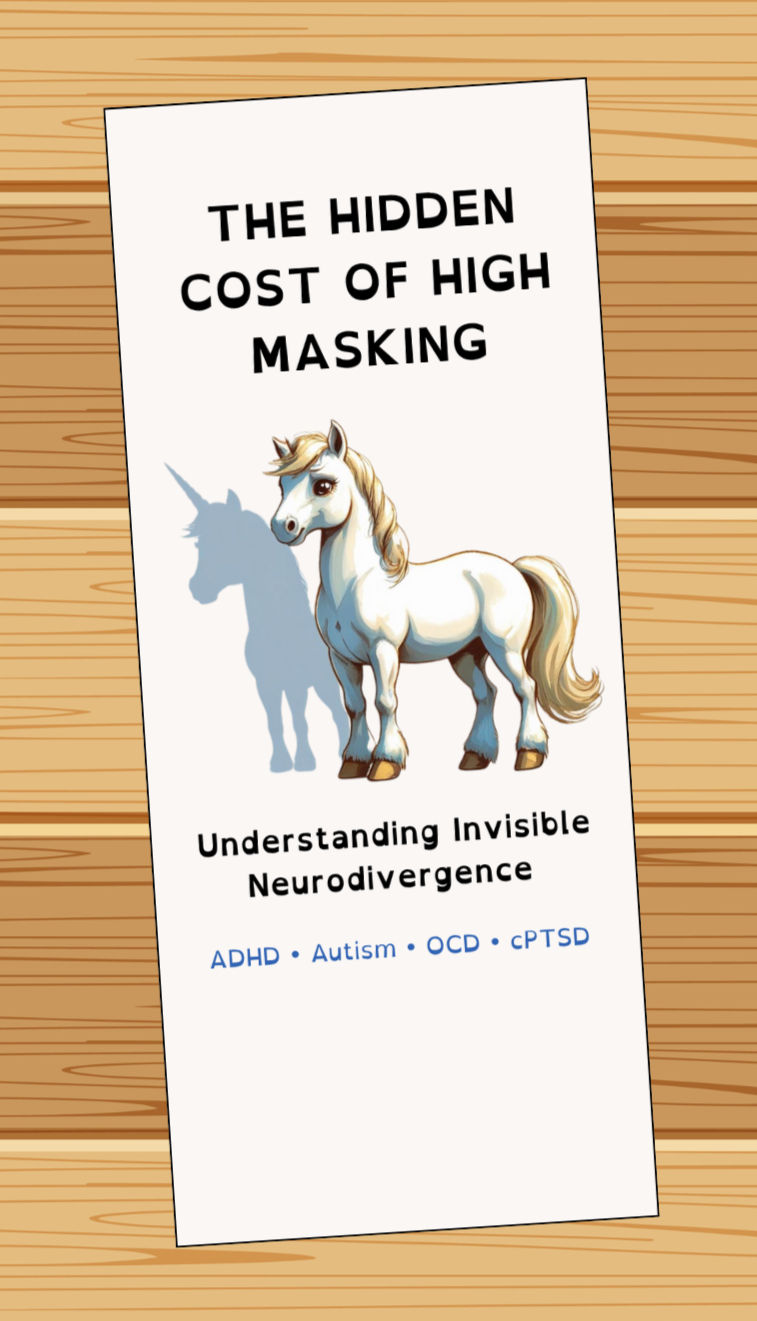
That’s why I created a free, shareable trifold for educators, counselors, neurodivergent people, and allies. It breaks down what high masking is, why it matters, and how to dismantle the myths that keep so many people unsupported. Download it now at the Smuggled Sparks store and share it today, perhaps changing a life tomorrow.
We can’t dismantle a rigged game overnight. But we can change how we see it, how we speak about it, and we refuse to play by rules that are designed to keep people "too good to be believed."



Comments